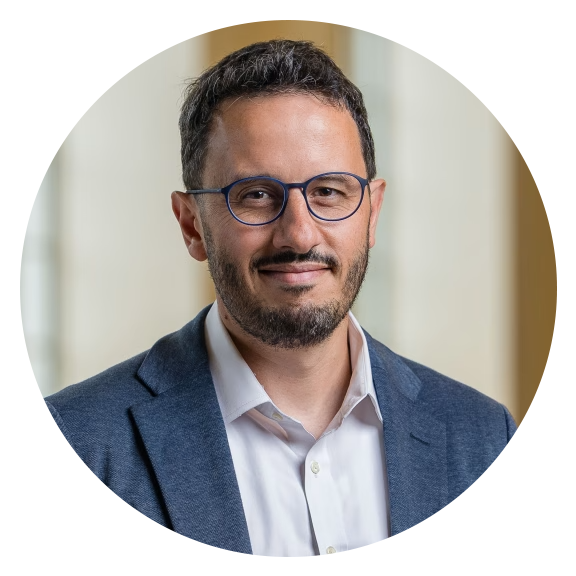
Sébastien Philippe
Sébastien Philippe is an Assistant Professor of Nuclear Engineering and Engineering Physics at the University of Wisconsin–Madison and an Associate Faculty member at the La Follette School of Public Affairs and in the Department of Political Science. He is also a visiting researcher with Princeton University’s Program on Science and Global Security, where he spent six years before joining UW–Madison in August 2025.
Philippe’s work combines scientific analysis with policy research to inform policymakers and the public about nuclear risks and to advance diplomatic and domestic policy solutions. His current research focuses on modeling the consequences of nuclear weapon use and nuclear war, monitoring and verification of international arms control agreements, and the environmental and public health legacies of nuclear testing. He is a 2025 MacArthur fellow.
Background
Dr. Philippe earned a PhD in Mechanical and Aerospace Engineering from Princeton University (2018), an MSc from the Institut National des Sciences Appliquées de Lyon (2010), and a BA from Trinity College Dublin (2009). Before joining UW–Madison in August 2025, he spent six years as a Research Scholar at Princeton University’s Program on Science and Global Security. He was previously a 2018–2019 Stanton Nuclear Security Postdoctoral Fellow at the Harvard Kennedy School’s Belfer Center for Science and International Affairs, Associate Faculty at the Nuclear Knowledges Program at Sciences-Po Paris (2019–2023), and a nuclear weapon system safety expert for strategic submarine forces at the French Ministry of Defense (2011–2012).
Scholarship
Dr. Philippe has authored and co-authored a book, a dozen peer-reviewed papers spanning nuclear science, policy, history, and security, and several major reports on nuclear policy and technology, published in high-impact outlets including Nature Communications, Science & Global Security, Scientific American, and the Journal for Peace and Nuclear Disarmament. He has led or co-directed major multimedia research collaborations—including The Moruroa Files and The Missiles on Our Land—that intersect science, security, environmental justice, and investigative journalism, and have received international recognition and policy impact.
His book Toxique (2021, 2nd ed. 2024), co-authored with journalist Tomas Statius, is a major investigation into the legacy of French nuclear testing in the Pacific. The work directly contributed to French President Emmanuel Macron publicly acknowledging France’s debt to French Polynesia, improvements to victims’ compensation, and the unprecedented opening of government archives.
Recognition & Impact
Dr. Philippe is a 2025 MacArthur Fellow—one of only twenty-two individuals nationwide awarded the prestigious “genius grant” that year. He is also the recipient of the 2025 Joseph A. Burton Award from the American Physical Society for outstanding contributions at the interface of physics and society, the 2022 Sigma Award for best data journalism in the world, and was a finalist for the 2021 Albert Londres Prize—France’s highest journalism honor.
He has been invited to present his work at Princeton, Harvard, MIT, Stanford, Yale, UC Berkeley, Sandia National Laboratory, Oak Ridge National Laboratory, the American Physical Society, the Lindau Physics Nobel Laureate Meeting, the United Nations, the US Congress, and the French Parliament. His research is regularly featured in major media outlets worldwide, including The New York Times, Le Monde, The Guardian, BBC, Scientific American, Science, Nature, Der Spiegel, CNN, Wired, and The New Yorker.
Teaching
At UW–Madison, Dr. Philippe teaches and mentors graduate students, undergraduates, and postdoctoral researchers through collaborative research and investigative journalism projects. He is currently recruiting postdoctoral fellows; prospective graduate students may apply through the UW–Madison Department of Nuclear Engineering & Engineering Physics.
Selected Resources
Interactive Investigation · Data Journalism
The Moruroa Files — A major multimedia investigation into the radiological, health, and political legacy of French nuclear testing in French Polynesia, winner of the 2022 Sigma Award for best data journalism in the world.
Interactive Investigation · Environmental Justice
The Missiles on Our Land — A data journalism project examining the public health consequences for communities living near US nuclear missile silos, covered internationally and featured in Scientific American and Der Spiegel.
Scientific American · December 2023
“Who Would Take the Brunt of an Attack on U.S. Nuclear Missile Silos?” — A peer-reviewed analysis of the civilian consequences of nuclear strikes on US land-based nuclear missiles, published in Scientific American Magazine.
Book · French University Press (PUF)
Toxique (2021, 2nd edition 2024), co-authored with Tomas Statius — A landmark investigation into France’s nuclear testing legacy in the Pacific that shaped French government policy and won multiple international awards.
UW Now Livestream · November 2025
A New Era for Nuclear Weapons — Prof. Philippe discusses U.S.–China nuclear diplomacy and the risk landscape of the current era of nuclear weapons.
Location
431 Engineering Research Bldg,
1500 Engineering Dr, Madison, WI 53711
Contact
sphilippe(at)wisc(dot)edu
(608) 263-3295 (office)
about evident
Independent research and new technologies to understand and reduce the risks posed by nuclear weapons.
Department of Nuclear Engineering and Engineering Physics
University of Wisconsin–Madison
Supported by the Carnegie Corporation of New York, MacArthur Foundation, PAX sapiens, Longview Philanthropy, and the Ploughshares Fund.